
A Fair Trade Ambassador Reflects on India
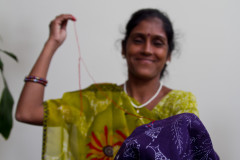
Sometimes one plane ride can change the course of your entire life. In 2006 my life changed after a vacation to India for two weeks over Thanksgiving.
From the moment I stepped off the plane in New Delhi, the smells, the sights, and the stark contrasts infiltrated my senses.
I saw so many things in those weeks: a sherbet colored sunset over the centuries-old castle at Fatehpur Skiri, beautifully crafted art at the Dilli Haat, people full of life and joy, and then, a dead body lying in the streets, a child beggar who danced when given only 20 rupees (50 cents), while I brushed my teeth with bottled water in a luxurious four bedroom, five bathroom apartment.
There, I told beggars, as is recommended, “I’m sorry; I only give to organizations.” I wanted to keep that promise, but in a way that would make real change, not just charity. By finding a way to help people that would transform their lives forever, not just that one dancing moment.
When I returned to the US, I scoured the internet and discovered the “Fair Trade” Movement.
Fair Trade is a way of doing business which connects producers to consumers while apportioning the producer a fair share of the purchase price.
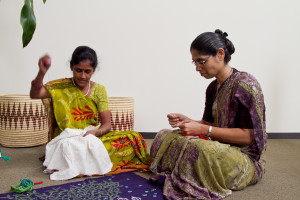
Fair Trade evens the playing field for the poorest farmers by: requiring transparency from the entire supply chain, organizing producers into democratic cooperatives, using indigenous, modern and sustainable farming practices. Fair Trade is still business, but in a more ethical way; without exploitation, with democracy and subsidiary.
Slowly, the Fair Trade movement overtook my life. Through my work with Fair Trade Los Angeles I was blessed to become a CRS Fair Trade Ambassador. Eventually, I found myself praying for a merger between my work and my volunteer selves. By chance, I discovered a graduate program, at Columbia University, a Master of Science in Sustainability Management. Perfect! This would allow me reshape my business experience into a new job which included a social mission - I hoped.
Happily, I was accepted into the Fall 2012 cohort.
My educational experiences have strengthened my own beliefs, by connecting poverty and sustainability in a way that has inspired me and moved me, while reinforcing that the issues of sustainability, labor, and poverty are interconnected.
I was surprised to find that not everyone felt the same. Some of my colleagues find these challenges too overwhelming to be breached, a very few have even used phrases like “those” people.
There are certainly others, who feel as I do, that ending poverty is an important component of sustainability, and that things like clean water are a human right, not just an environmental issue. They believe, as I do, that until we take on the deep challenges of poverty, we cannot heal the planet.
Three semesters into my masters, I believe even more, that Fair Trade can provide solutions for pollution and poverty, by helping farmers stay on their own land, in the countryside. Besides increasing incomes, cooperative members democratically decide on how to use dues/fees: building latrines, a well, or a school, whatever is most needed.
One day I will return to India to visit a Fair Trade weaving cooperative which now makes many of the clothes in my closet. I have learned, through Fair Trade and graduate school, that each dollar spent votes for a better Earth and justice for her people. I’d like for others to learn this lesson too.
Guest Post by Elizabeth O’Neill, CRS Fair Trade Ambassador

What is the difference between Fair Trade and Fairtrade? What is a surveillance audit? – Find out with the Fair Trade Glossary (PDF), a listing of all fair trade terminology created by Fairtrade International, FLO-CERT and World Fair Trade Organization (WFTO).
Dear Elizabeth,
I loved reading your entry! I appreciate your ability to articulate feelings, experiences and looking down the long road. Thank you!
fair trade is a wonderful concept and one of the best ways to preserve culture as well as help people value their skills- by giving them a chance to make a good living out of it